Heres another superb article about some local maestros from Gretna...thanks to WPW.
Lance Smith and Sons three national wins
Over the final two decades of the last century, pigeon racing changed in our area with fanciers moving from racing their birds on the traditional Natural method to working them on a form of Widowhood. One loft that made the change in early days was that of Lance Smith and Sons from Gretna, who having modified their methods and changed the composition of their loft, achieved more than impressive results. Lance was reared in the village of Watchhill on the outskirts of Annan. There was a keen interest in the pigeon hobby in the village, indeed, two of his uncles were gifted fanciers and friends of Lance from schoolboy days became household names in our hobby. In time Lance married and moved to Gretna. As his sons David and Paul grew up, they also harboured an interest in the Pigeon Fancy, no doubt being influenced by their father. In 1974 Paul purchased the loft of friend Norman Nelson for the princely sum of £12. There were two youngsters in the loft at the time and Paul and David raced them through the young bird programme to Cheltenham. From the outset, Lance encouraged his sons and within months the loft was competing under the title ‘Lance Smith and Sons’. When Paul purchased the loft it was situated on an allotment and the new partners continued to race their pigeons to this location for several years. Circumstance caused them to move the loft however and it was relocated in the back garden of the family home. Due to the loft move they were unable to race their Y.B. team that year; the following year, however these previously unraced youngsters were put on the road as yearlings and won the Yearling Cup in Springfield Club.
As explained on entry into the article as the years rolled by the entire concept of pigeon racing changed in our area and whilst Lance and his sons continued to win on their previous method they realised they would have to introduce new bloodlines and change their system if they were going to keep pace with fanciers in the area who were using more modern methods to work their pigeons. After some deliberation they decided to introduce examples of the Mattheeuws family and chose to obtain these pigeons from David Page from Pickering, West Yorkshire. Having made the decision as to which bloodlines they would introduce and from where they would source them, they made meaningful contact with David Page. From the outset David and Paul formed a close friendship with the fancier from South of the Border and as the months passed they introduced into their loft examples of several Continental families from him, including, Mattheeuws, Van Winkel, Janssens etc. These bloodlines won immediately and amongst the birds to emerge was a Van Winkel hen, which as a yearling she was 9th Club Dorchester and 7th Section 11th Open Yearling Derby Dorchester with Scottish Specialist Club. As a 2 y.o. she was 2nd Club, 2nd East Section Fed. Cheltenham, 5th Club, 18th Section, 73rd Open S.N.F.C. Sartilly (2) and 1st Club, 2nd Section and Open Solway Fed. Sartilly. When the Smith family initially raced the birds that they had introduced from PickerIng, they worked them on the Natural system but in time, being advised and encouraged by their mentor, they decided to change their management method to Widowhood. They initially experimented with the system in 1992, racing cocks and hens and on making the change they reasoned that during their first year on the system, they would go through a ‘learning curve’. To their pleasant surprise, however, they won 8 x 1sts in the Club and were twice 1st Fed. and twice 2nd Fed. They also gained the O.B. Average and O.B. Points trophies in the Club and were awarded trophies also for Best Inland and Best Channel Performance. The clock moved forward and following ongoing dialogue with David Page, the partners perfected a system racing cocks and hens pure Widowhood, occasionally working them on a Roundabout method. Over successive seasons the loft won out of turn in local and Federation competition. Whilst the partners had previously competed quite successfully in Classic competition prior to them introducing the modern Continental bloodlines, they changed the emphasis of the loft to local competition only.
In 1999 however, they decided to ‘have a go’ from the Nationals and gained 1st Open from the first National in which they competed from Frome. It should be noted that prior to the programme extending to Frome in 1999, the partners timed four pigeons in 44 seconds from Appleton to be 1st, 2nd, 3rd and 5th Fed., they were 2nd and 3rd Fed. from a difficult Worcester race and one week later were 1st and 2nd Fed. from Cheltenham with their winner being a noted Mealy cock, which had previously been 2 x 1st, 2nd, 5th and 2 x 6th Fed. The winning pigeon from Frome was a yearling Blue Chequer widowhood cock that went to the final three Y.B. races in 1998 and in preparation for the Frome National competed from four Federation races through to Cheltenham. He was thereafter worked around the loft and went to the race with his first flight half grown. The cock was bred by Mark and Pat Goldie from Eastriggs, identically bred to the breeders’ ‘Delhi Pride’ that was 2nd Open Y.B. National 1995, parents having been obtained from John McManus from Cambridge. The pigeon was named ‘Goldie’s Choice’.
Following the National win from Frome, Lance and his sons concentrated on preparing a team for the Sartilly National and to their credit they came out and won this race also. The winning pigeon on this occasion was a 2 y.o. Blue Chequer hen that was worked on the conventional method as a youngster, going through the Y.B. programme. She was raced Reverse Widowhood as a yearling and went through the programme to Frome. In 1999 she was paired just after Blackpool Show and reared a pair of youngsters, after which she was split from her mate and put on Roundabout. In keeping with all other primary pigeons in the loft, the Chequer hen did not enter a race basket until the third Fed. race, then going to five inland races, gaining 9th Stafford, 4th Worcester, 4th Cheltenham and 39th Open S.N.F.C. Frome. Over the weeks before Sartilly she was worked around the loft and was tossed twice from Brampton to the East and thrice from Appleby to the S.E. Having been re-paired she was basketed for the National covering eleven-day eggs. Interestingly, she had thrown her third and fourth primary flights together, which were half-grown on return from the race. Her four grand-parents were bred by David Page, Sire was a Janssen x Mattheeuws, the paternal grandsire being a son of ‘Tom’, which was a Janssen raced by Tommy Smith from Chopwell that won 5 x 1sts and at stock bred in excess of 60 winners. The paternal grand dam of the Sartilly winner was a daughter of the Ace Mattheeuws cock ‘Dynarod’. Maternal grand dam was a daughter of ‘Jules’ from Brian Clayburn, which had bred in excess of 30 winners. I expand on the breeding detail to demonstrate that David and Paul were not just buying strain names they were buying quality pigeons closely related to top winners. The National winner was named ‘Page Girl’.
In the Millenium season the partners achieved their third National in from Newbury. The winning pigeon on this occasion being yearling Blue Chequer hen ‘Three Time a Lady’. She went through the Fed. programme to Stafford as a youngster in the year 2000 was coupled at the beginning of February and reared a pair of youngsters. She was then put on Roundabout and had three inland races from Appleton, Stafford and Worcester. She then went to Newbury with her second flight half grown. She was the product of a mother and son pairing, her Dam being the same Van Elsaker Janssen x Mattheeuws that bred ‘Page Girl’ the Sartilly winner with her Sire being a full brother of the Sartilly winner. The Sire incidentally was a Blue Chequer cock that was lost at Cheltenham as a yearling, having previously gained a 1st and 6th Fed.
Move forward one year to 2001 and the partners once more concentrated on the Nationals. Birds went to Appleton for their first race of the season and were 1st Fed. The following week they competed from Stafford and again headed the Fed. result thereafter going to Worcester for their third race of the season and on this occasion were 2nd Fed. They then raced from the Inland National from Frome for their fourth race of the season and were 6th and 7th Section and Open. The next race in which they participated was the Inland National from Portland and once again they headed the result. The National winner was 4 y.o. Blue Pied hen ‘Kathlene’, she had two races as a youngster and was then lost for four weeks. She was put back on the road as a yearling and went through the programme to Cheltenham. In the Millenium season she competed from four Federation races and then went to Newbury and Vire with the National. In 2001 she was coupled in February and reared a pair of youngsters and was thereafter split from her mate and put on Roundabout. She then went to Appleton, Stafford and Worcester with the Federation after which she went to Frome with the S.N.F.C. and was 7th Open. She was re-paired after the Frome National and went back down on eggs and when sitting 7 days was again split from her mate and put back on Roundabout. She didn’t see her mate again until the day before basketing for the Portland National. With knowledge that the birds were being basketed on the Thursday she was put back with the cock on the Wednesday. Straw was placed in the nestbox and the pair of pigeons were given a nestbowl. She was basketed for the race with her fourth flight half grown. The bloodlines were once again David Page. She was a ¾ Van Winkel and ¼ Janssen with her Sire being a Son of the Ace Van Winkel stock cock ‘Kleinen Blue’. The Janssen influence in the pedigree was through a Jackson Andrew Janssen from Tommy Smith from Chopwell. It should be noted also that the Sire of ‘Kathlene’ was the Sire also of the loft’s noted Mattheeuws x Van Winkel Mealy cock to which I previously referred.
Whilst the partners’ methods are now commonplace, they were not at the time. Adult Roundabout racers were housed in two sheds that were set close together. Cocks were housed in the primary loft that was kitted out with Widowhood nest-boxes; it had a tiled apex roof with the birds trapping through a Sputnik trap. Hens were housed a smaller shed with a flat roof and perched on poles to discourage them from pairing. Similar to the cocks, they trapped through a Sputnik trap. The two sheds were connected by means of a simple box; whist the hens were exercising the cocks were allowed through the ‘connecting box’ into the smaller shed. Having completed their period of exercise the hens trapped into the primary shed containing the nest-boxes and were fed in troughs on the floor in the primary shed. The cocks were then put out to exercise from the smaller shed and having been fed the hens were put through the ‘connecting box’ into the smaller shed. Having completed their period of exercise the cocks trapped into the primary loft and similar to the hens were fed in troughs on the floor and perched in the nest-boxes. Birds had two pre-season training tosses and were thereafter worked around the loft only, morning and night. Whilst they exercised freely during the early part of the season, some hens were not too keen to work after they had been re-paired for the Classics and in such circumstance the partners used a flag to keep them going and complete their required period of exercise.
Space does not permit me to list all the positions gained by this team of pigeons. As the months moved forward, however change in personal circumstance caused it all to come to an end. Lance regrettably developed a sight impairment, which in the first instance curtailed his ability to work with the pigeons and in a relatively short space of time he was unable to care for them. David, meanwhile, established a Taxi business and was so busy with his work he had no free time whatsoever to spend in the pigeon loft. Regrettably therefore it all came to an end but there is no doubt that Lance, David and Paul demonstrated what could be achieved with good pigeons, strict discipline and a meaningful management system.
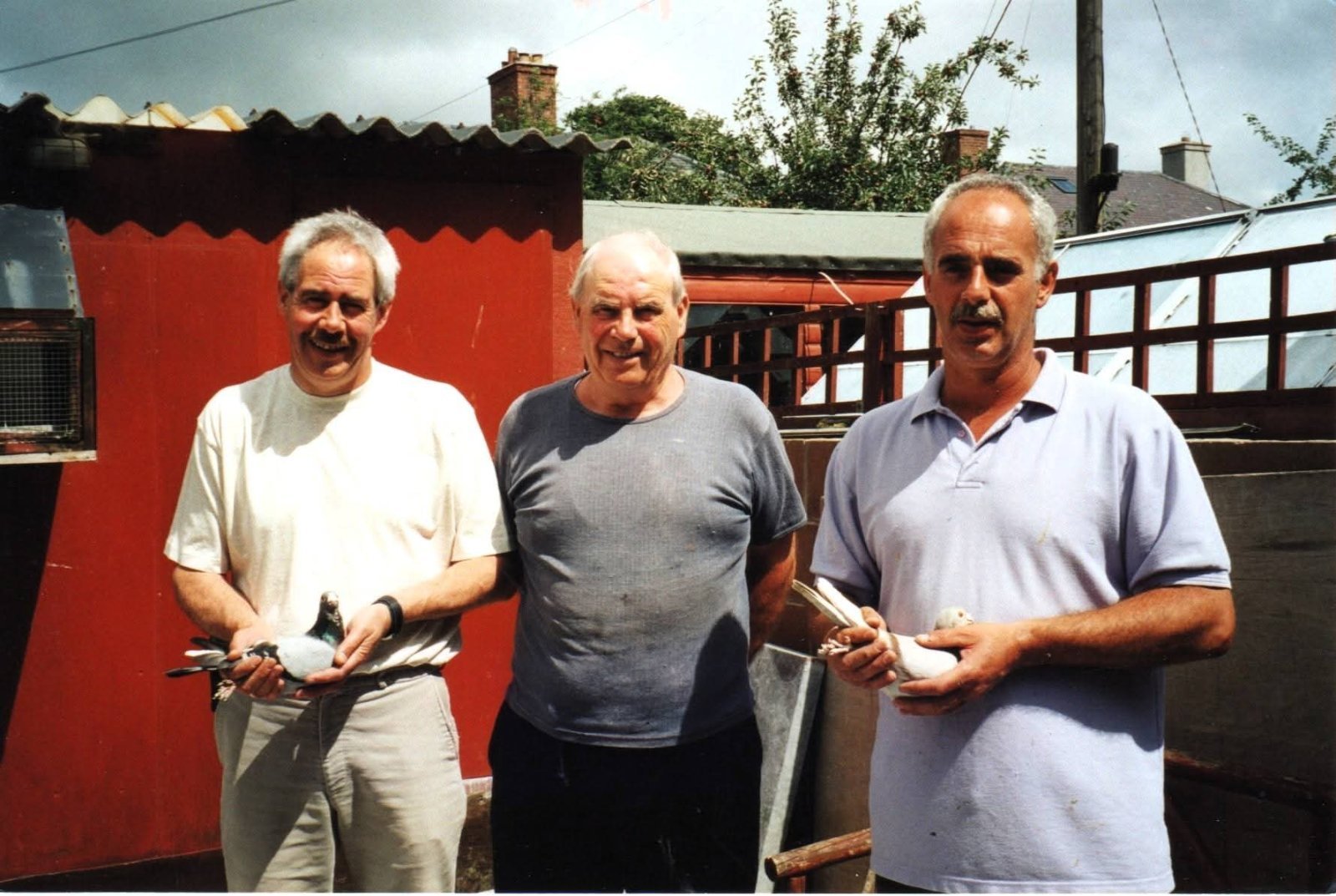
The photographs that complement this article show Lance Smith and his sons, David (left) and Paul, Blue Chequer Cock ‘Goldie’s Choice’, Blue Chequer hen ‘Page Girl’ (note the third and fourth primary flights growing together), Blue Chequer hen ‘Three Times a Lady’ and Blue Pied hen ‘Kathlene’.
Got a question or a view on this article?
Discuss it on the forum